Comparisons · 2022-07-25
BPC-157 vs GHK-Cu: research peptide comparison (UK)
BPC-157 5 mg compared with GHK-Cu 50 mg for UK laboratory supply: identity, documentation, storage, and how Solent lists both. Research use only.
Two defined materials
BPC-157 and GHK-Cu are separate catalogue entries. A synthetic pentadecapeptide derived from a gastric-juice protein fragment, studied in experimental models of tissue-protection and angiogenesis pathways. The copper(II) complex of the tripeptide GHK, studied in research into extracellular-matrix signalling and skin-model biochemistry. Neither is a licensed medicine. Solent does not recommend one over the other for any biological effect — choose by the protocol you have written.
BPC-157
BPC-157 5 mg is listed under tissue repair. CAS 137525-51-0. Purity ≥ 99% (HPLC). Packed as lyophilised powder and dispatched from Southampton.
GHK-Cu
GHK-Cu 50 mg is listed under tissue repair. CAS 89030-95-5. Purity ≥ 99% (HPLC). Same standard: HPLC identity, lot number on the vial.
Buying both in the UK
UK laboratories can order BPC-157 and GHK-Cu on the same research invoice from the cheapest HPLC ≥99% Southampton catalogue we record. Next-working-day courier to most mainland postcodes. Confirm research-use-only at checkout.
Laboratory research only. Not for human or animal consumption. Research disclaimer.
Catalogue
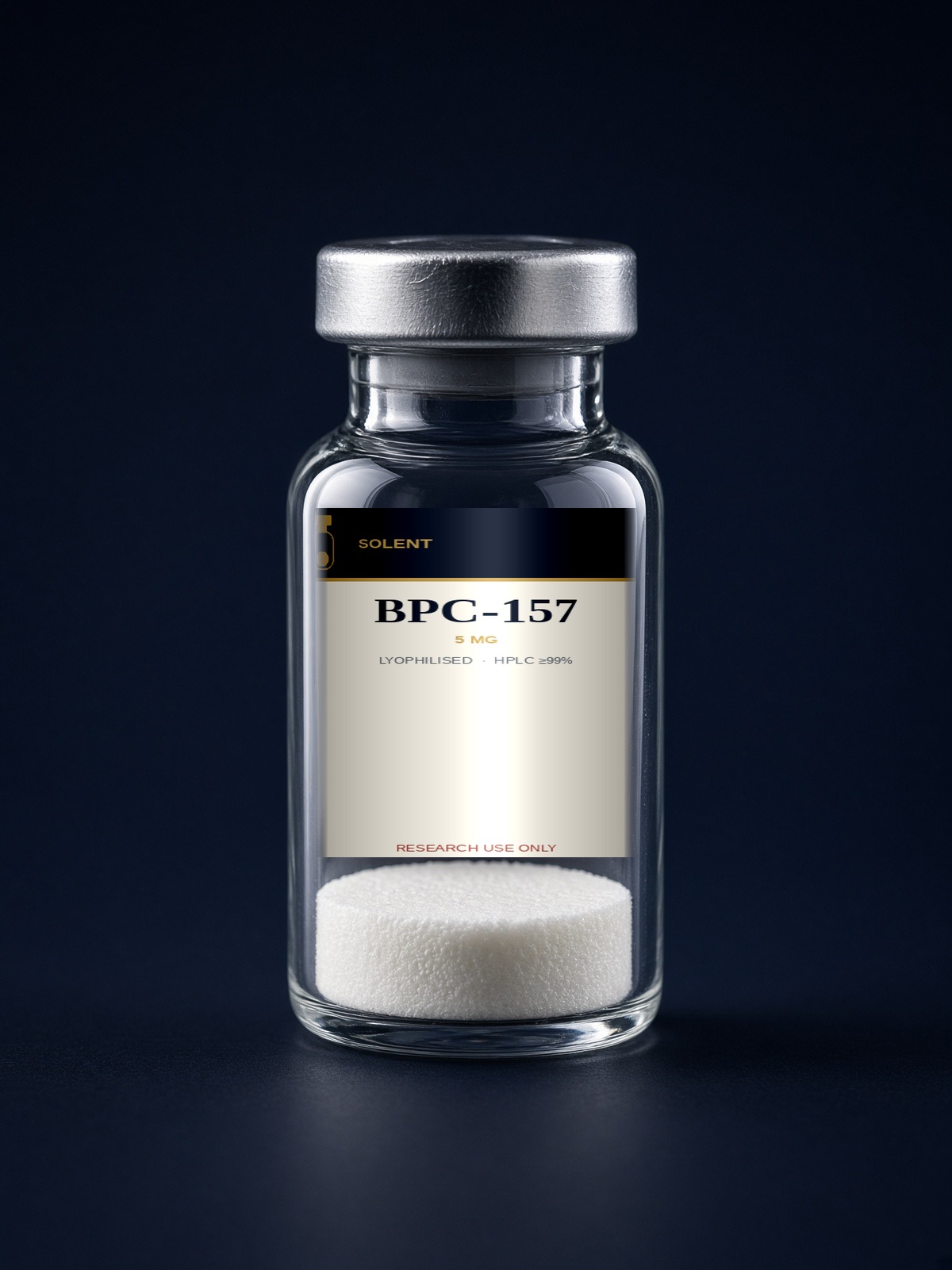
A synthetic pentadecapeptide derived from a gastric-juice protein fragment, studied in experimental models of tissue-protection and angiogenesis pathways.
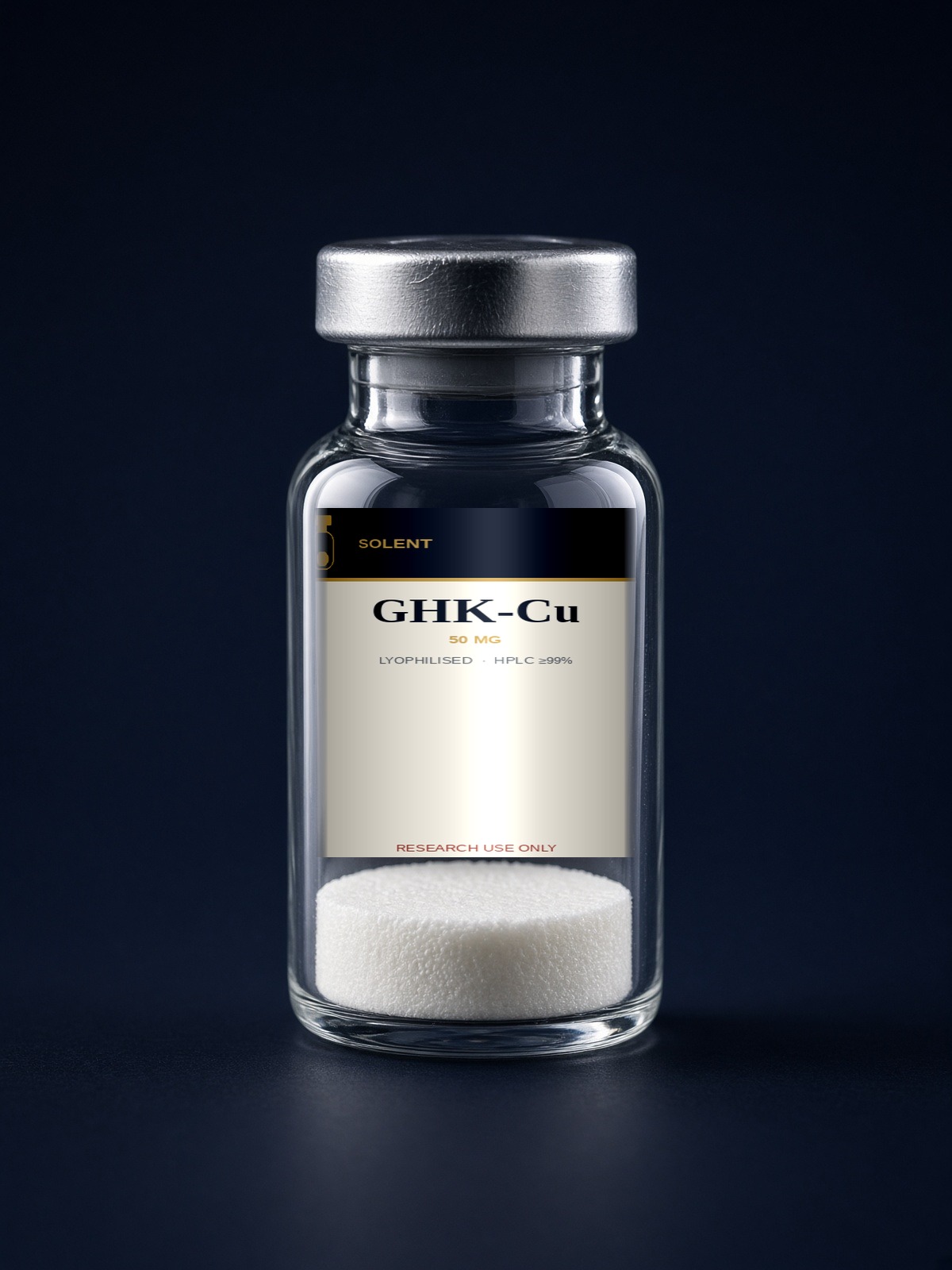
The copper(II) complex of the tripeptide GHK, studied in research into extracellular-matrix signalling and skin-model biochemistry.
More notes
- Sermorelin (GRF 1-29) vs Wolverine Stack: research peptide comparison (UK)
- Melanotan 2 vs Wolverine Stack: research peptide comparison (UK)
- Melanotan 2 vs Sermorelin (GRF 1-29): research peptide comparison (UK)
- PT-141 Bremelanotide vs Wolverine Stack: research peptide comparison (UK)
- PT-141 Bremelanotide vs Sermorelin (GRF 1-29): research peptide comparison (UK)
- PT-141 Bremelanotide vs Melanotan 2: research peptide comparison (UK)